Select for curiosity
MIDAD looks for curiosity and engineering ability—the instinct to ask how something works and try a new way.
MIDAD is an EFK STEM initiative helping Palestinian children learn through STEAM: Science, Technology, Engineering, Arts and Mathematics.
The existing donation portal accepts unrestricted gifts to the Association’s General Fund, not a confirmed MIDAD-specific designation.
11,000+
children reached by EFK since 2017
EFK historical reach, not results from the proposed MIDAD cohort.
4–17
proposed age range · years old
Why now / the context
MIDAD proposes a hands-on learning journey: discover curiosity, develop it through practice, and measure progress.
A changing world / a young population
Changing work and a young resident population make practical learning and the ability to keep learning important.
78m
78 million net additional jobs globally projected by 2030.
World Economic Forum, Future of Jobs Report 202559 / 100
59 out of every 100 workers are expected to need training, upskilling or reskilling by 2030.
World Economic Forum, Future of Jobs Report 202537%
of the resident population covered by the PCBS report is under 15 — July 2025 estimates, not Palestinians worldwide.
PCBS, World Population Day estimates, July 202565%
of the resident population covered by the PCBS report is under 30 — July 2025 estimates, not Palestinians worldwide.
PCBS, World Population Day estimates, July 2025The MIDAD thesis
MIDAD looks for curiosity and engineering ability—the instinct to ask how something works and try a new way.
The proposed journey uses experiments and projects to develop practical skills.
Age-appropriate progress measures, reporting and safeguarding arrangements require approval.
The journey / from discovery to launch
From everyday challenges to playful space exploration: energy, mechanical, civil and space engineering connect ideas with hands-on learning.
What learning looks like
Science, Technology, Engineering, Arts, and Mathematics—connected fields that help children understand the world and shape solutions.
Observe carefully and test ideas.
Use tools and coding to make things work.
Design, build, and improve solutions.
Imagine, sketch, and communicate ideas.
Measure, compare, and make sense of results.
These examples illustrate the fields; they are not named workshops. Projects and materials are set for each group according to its age.
01 / 04
Explore renewable power and more efficient designs.
Illustrative project idea: a model wind turbine.
02 / 04
Explore forces, gears, and mechanisms that move.
Illustrative project idea: a model vehicle.
03 / 04
Explore structures, materials, and infrastructure.
Illustrative project idea: test a model bridge.
04 / 04
Explore flight and space systems through imagination.
Illustrative project idea: design a model rover.
Beyond the tools
Alongside technical STEAM skills, children practise learning habits as they explore questions and make solutions.
Ask what the evidence shows, then test an idea such as which bridge design holds more weight.
Imagine and sketch a new solution to a practical challenge using the materials at hand.
Build as a team, share the tools and combine different ideas into one working model.
Explain your design and show how each part helps it work.
Persevere when a test fails, learn from it and take responsibility for your part.
Consider how a design can care for the community and the environment.
Practised through hands-on projects, reflection and teamwork.
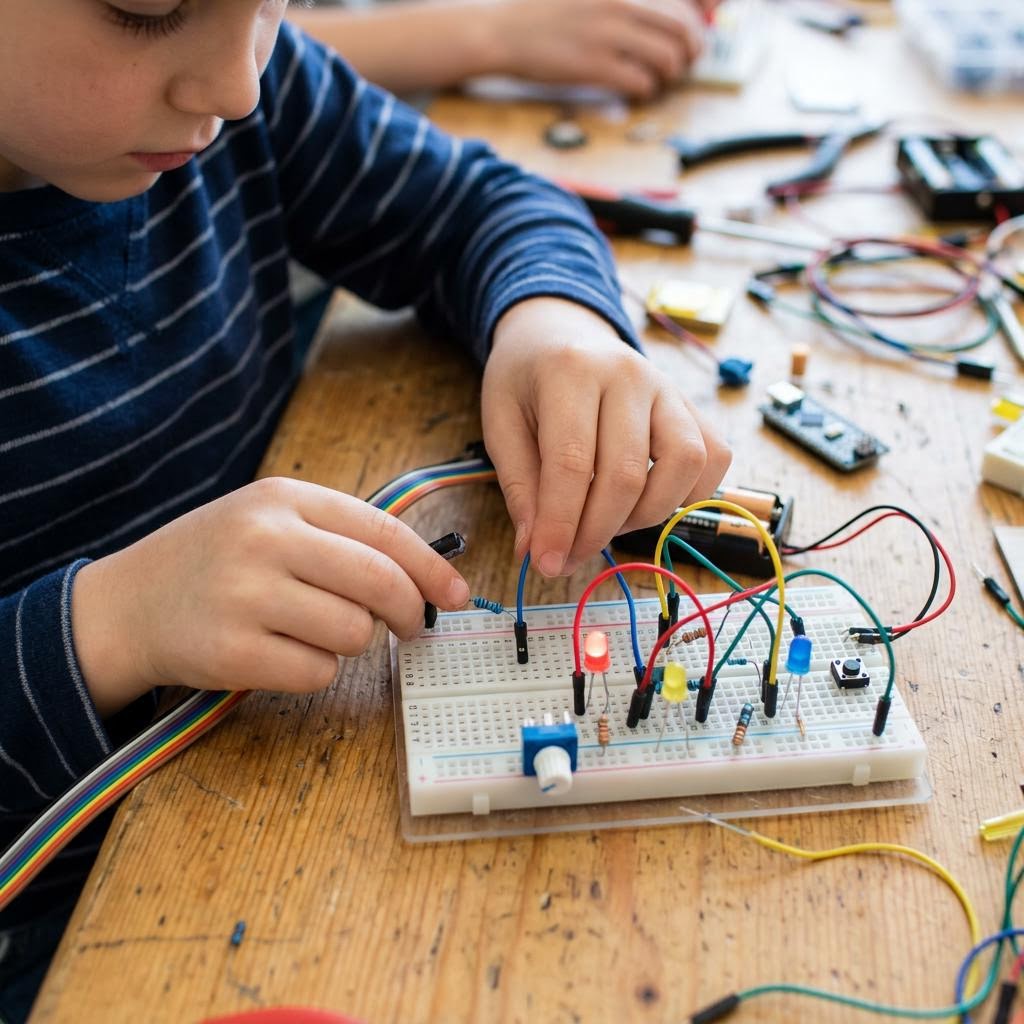
01 / 03
Find the question worth asking.
Ask how things work: how can we use energy wisely, make a mechanism move, or design a stronger structure? Curiosity starts the learning journey.
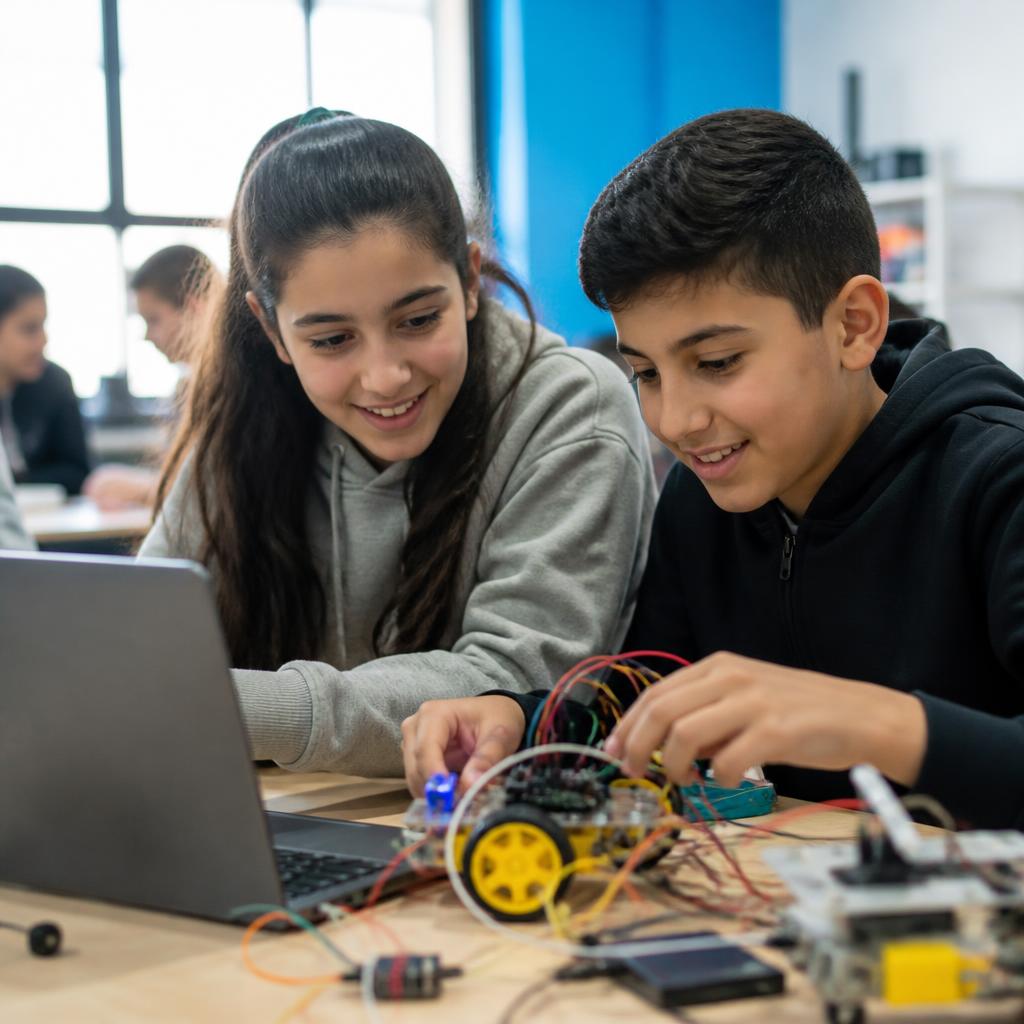
02 / 03
Turn curiosity into capability.
Combine scientific experiments, coding, engineering design, creative sketches and mathematical measurements. Build, test, compare and improve—not just memorize.
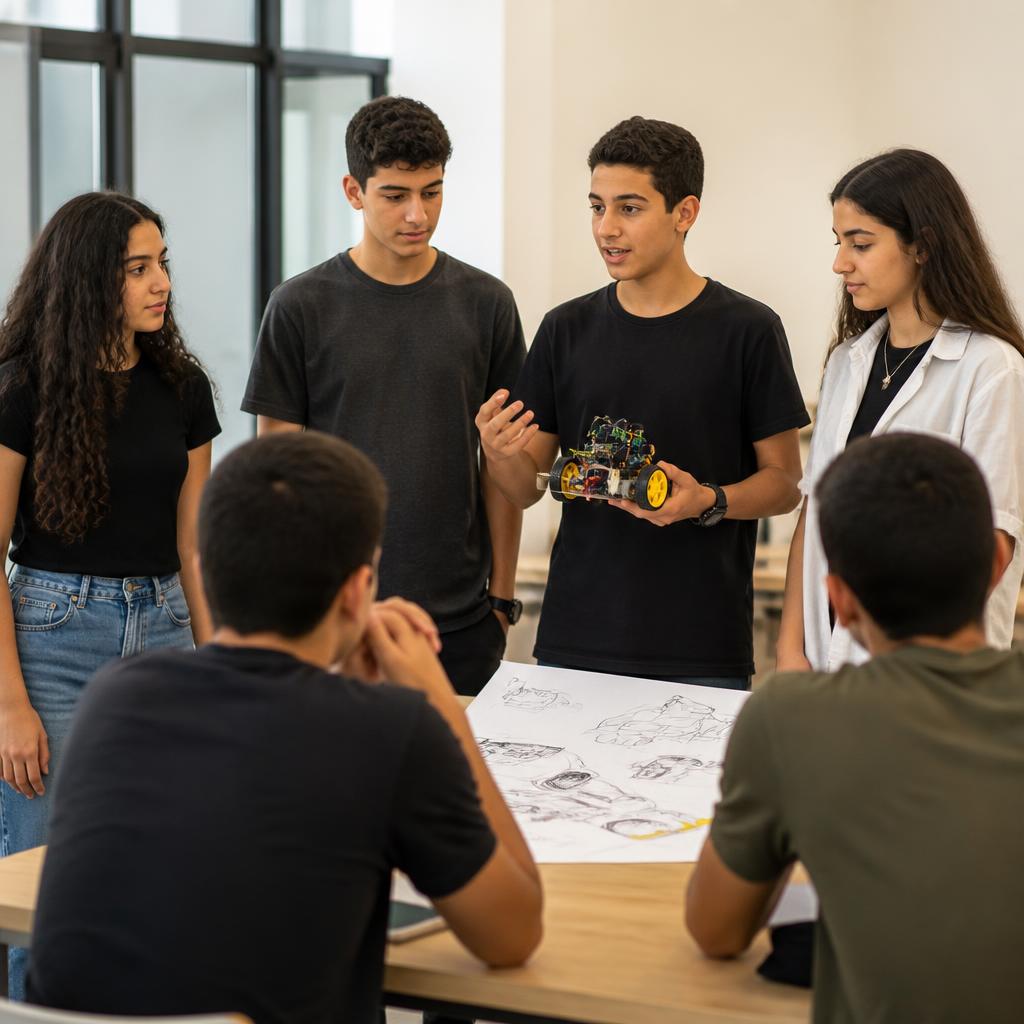
03 / 03
From an idea to a potential enterprise.
Through MIDAD’s planned youth entrepreneurship programme, students will be guided to develop and test ideas, explore patent applications where appropriate, and work toward manufacturing and selling suitable products.
We have connections and cooperation with other Engineering For Kids branches globally.
The proposed model combines donations for learning with separate commercial or investment arrangements for suitable ventures. Product sales or licensing could support students and the programme; any investor return would require a separate agreement. Donations do not buy ownership or financial returns.
Student inventorship, ownership, consent and any revenue sharing must be defined before commercial activity, with guardian involvement and legal guidance. Learning comes first: patent approval, manufacturing, sales and profits are not guaranteed.

Proof before promise
EFK experience informs a proposed new cohort.
EFK’s track record. MIDAD’s next step.
The figures below describe EFK’s historical work. They are not participant outcomes or funds raised by MIDAD’s proposed new cohort.
11,000+
children reached since 2017
2,850+
hands-on activities
18+
engineering disciplines
Small gifts. Big exploration.
Help children explore science and engineering by testing ideas and making things.
These are proposed options within existing programme funding—not an addition to the $100,000 campaign goal.
Explore proposed small-gift options
Selected proposal
Help provide starter resources for building, measuring and testing ideas.
Learning resources for trying, exploring and making.
Acknowledgements and updates are to be confirmed before giving.
To give, enter your desired amount in the portal. Selecting a kit does not transfer an amount, and the portal does not confirm MIDAD designation. Confirm the gift designation, kit scope, cost and availability, and acknowledgements with the programme before giving.
Safeguarding: Photos are shared only with documented consent and child-safeguarding procedures. Any invitations are scheduled, supervised group activities—never unrestricted access or donor influence over children.
The existing donation portal accepts unrestricted gifts to the Association’s General Fund, not a confirmed MIDAD-specific designation.
The founding circle / 2026
Discuss support for a proposed founding cohort of 30 students. Direct student sponsorship is distinct from the full campaign budget.
Sponsorship creates access to a rigorous, hands-on journey. It is an opportunity to participate in the work, not a promise of business returns.
Choose your entry point
Proposed amounts distinguish direct student sponsorship from shared campaign costs and the continuity fund. Inclusions remain subject to cost validation.
Proposed annual sponsorship for one student, subject to cost validation.
The learning period, delivery arrangements and what $1,500 includes or excludes require owner approval.
Proposed annual sponsorship for 10 students at $1,500 each.
This is direct student sponsorship, not the separate $15,000 shared-operations budget. It contributes toward the student-place allocation; it is not added on top of it. Inclusions remain subject to cost validation.
Proposed expansion: up to 20 additional students at $1,500 each.
Student numbers, delivery coverage and inclusions remain owner decisions.
Proposed founding cohort: 30 students at $1,500 each.
Direct student sponsorship totals $45,000; the expanded goal separately includes shared costs and the Learning Continuity Fund.
Discuss support for the proposed expanded campaign goal, not simply one cohort.
Cohort size, shared costs, continuity funding and recognition benefits require agreement. No naming rights over children or access to children is offered.
The existing donation portal accepts unrestricted gifts to the Association’s General Fund, not a confirmed MIDAD-specific designation.